


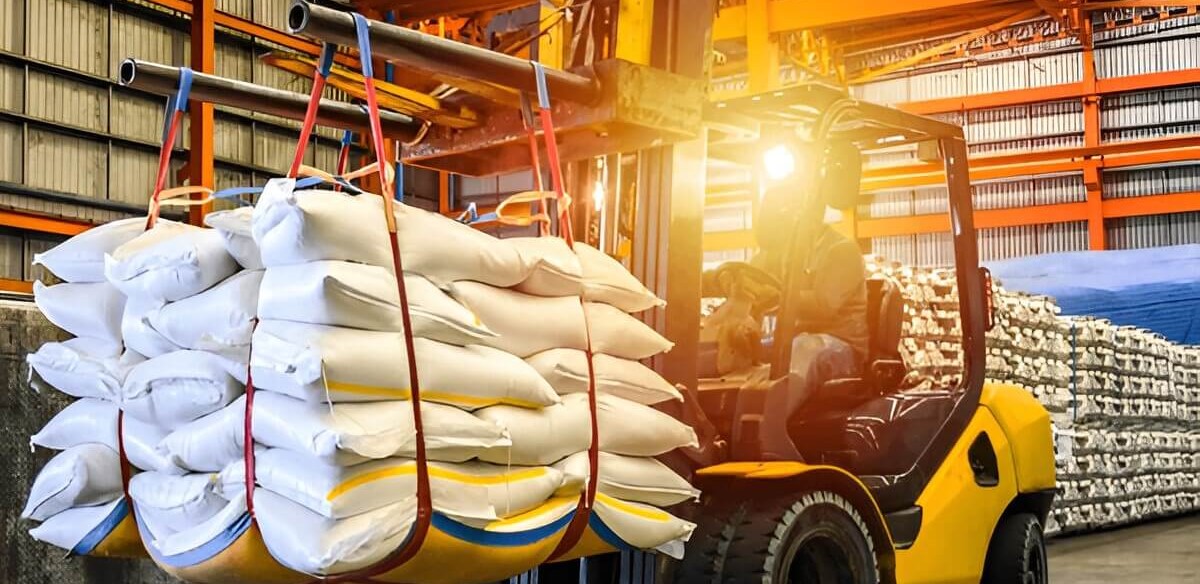
In sectors where the activities include, transporting, elevating or storing large quantities of goods, the aspect of safety on the handling equipment comes first. In other words, whether it is a storage facility, a factory, or a site for building construction, material handling enclaves (MHE) like hoists, trolleys, and cranes among others are employed. Nonetheless, every form of abuse or embarrassment to such equipment can cause personal injuries, destruction of properties, and even bring the operations to a standstill.
Shri Arvind Foundation’s Material Handling Equipment Safety Training is developed in consonance with the industry safety requirements and also conforms to the standards set by the National Skill Development Corporation (NSDC) and focuses on educating the employees and supervisors regarding the material handling equipment MHE, its associated risks and techniques of its usage.
The safety training on material handling equipment lays emphasis as much on understanding the theory behind the equipment as on the training in maintenance, use and inspection of the equipment in practice to ensure safety at work. Participants understand how different kinds of equipment work, their limitation, how they should be operated and the different measures put in place to avert any inadvertent happenings.
At Shri Arvind Foundation, this training aims to improve consciousness and skills for new growing workers or old professionals, with the emphasis of transport practices, safeguards and checks for the equipment in question. At the completion of the training, individuals are able to safely handle materials and the hazards posed are greatly reduced.
The Shri Arvind Foundation has a very practical and all-embracing approach to Material Handling Equipment Safety Training, which has received approval from the NSDC for meeting the stipulations of the industry. In all our trainings, we do not only teach safe ways of doing things but also emphasize the importance of safety culture where every worker takes responsibility of preventing accidents and ensuring that work goes on without interruption.
Hence, they have practical sessions and scenario-based exercises where they practice the use of equipment, situational awareness and emergency response. This practical way of learning improves self-assuredness, minimizes chances of accidents and encourages team work regarding safety in the work environment.
In the modern industrial settings with diverse processes, ensuring safe operation of equipment is advantageous in the short and long run. When MHE safety training is effective, accidents decrease, downtime gets reduced as well as a more time efficient workforce. Additionally, businesses benefit economically, in terms of lowered liability costs as well as insurance premiums, and higher morale of employees by doing training in a focused manner.
Providing training to workers also ensures compliance with the laws and regulations and thereby alleviates the chances of incurring penalties or of being unable to operate as a result of safety breaches. Companies dedicated to training potential hazards arising from material handling not only benefit and safeguard the employees in such organizations but also help improve the prevailing standards in the sector.
Even as we build on our safety expertise, Shri Arvind Foundation will again provide a training platform on MHE safety to individuals and organizations willing to learn. As work environments grow in difficulty, we remain committed to providing relevant and effective safety solutions – enabling business growth and empowering people to play their part in ensuring a safe and conducive working environment.


Considering primary motivation for the generation of narratives is a useful concept

Etiam non elit nec augue tempor gravida et sed velit. Aliquam tempus eget lorem ut malesuada. Phasellus dictum est sed libero posuere dignissim.

Tempor non elit nec augue nec gravida et sed velit. Aliquam tempus eget lorem ut malesuada. Phasellus dictum est sed libero posuere dignissim.

Tempor non elit nec augue nec gravida et sed velit. Aliquam tempus eget lorem ut malesuada. Phasellus dictum est sed libero posuere dignissim.

Tempor non elit nec augue nec gravida et sed velit. Aliquam tempus eget lorem ut malesuada. Phasellus dictum est sed libero posuere dignissim.

Tempor non elit nec augue nec gravida et sed velit. Aliquam tempus eget lorem ut malesuada. Phasellus dictum est sed libero posuere dignissim.

Quick Enquiry